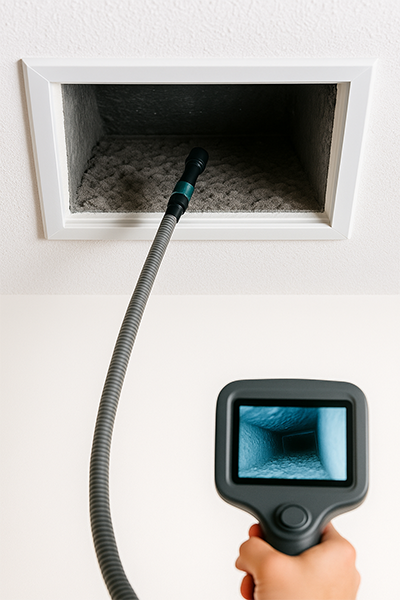
Mold inside an HVAC system is not always easy to see, but it usually shows clear warning signs that indicate a hidden problem. If you experience any of the symptoms below, it may be time to have your system inspected for mold:
- A musty or damp smell when your HVAC system is running
- Dark or black spots visible on vents, registers, or HVAC components
- Worsening allergy or asthma symptoms while indoors
- Poor or uneven airflow throughout your home
- Excessive dust accumulation around air vents despite regular cleaning
- Moisture or condensation on ductwork, vents, or HVAC equipment
- Unexpected spikes in energy bills caused by reduced system efficiency
When to Contact a Professional for Mold in Air Vents & HVAC System
Mold inside your HVAC system or air ducts should almost always be handled by a trained professional. While homeowners may be able to wipe away small amounts of surface mold on vent covers, any mold found deeper within the ductwork or HVAC components requires expert remediation.
You should contact a professional if you:
- Notice a persistent musty odor throughout your home
- See dark stains or patches that continue to return after cleaning
- Find mold growth inside air ducts, near coils, or around blower components
- Experience ongoing health symptoms such as coughing, sneezing, headaches, or irritation
- Have asthma, allergies, or other respiratory conditions
- Are you dealing with recurring mold issues or recent water or flood damage
Professional mold remediation specialists use advanced equipment and EPA-approved disinfectants to thoroughly clean and restore HVAC systems.
According to the IICRC S520 standard for mold remediation, any mold contamination involving HVAC systems or hard to reach areas such as the interior of ductwork should be addressed by certified technicians using proper containment methods, negative air pressure, and HEPA filtration.
Why this is important: Mold inside HVAC systems can easily spread spores throughout